
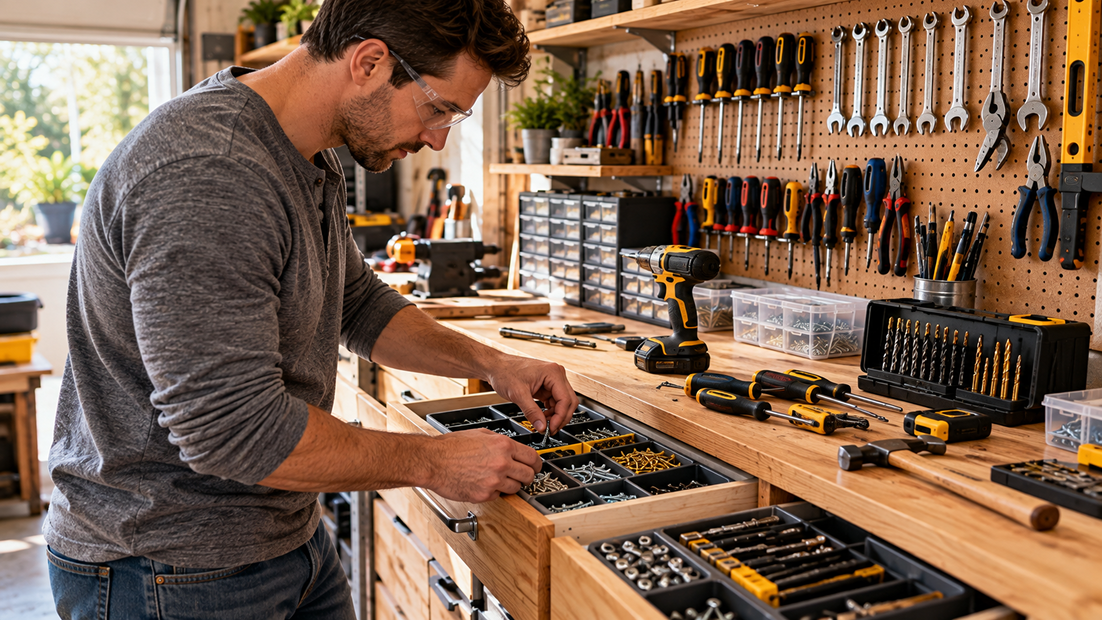
A home workshop does not need to be large to be useful. A garage corner, basement wall, or compact shed can become a dependable place for repairs and weekend projects when tools, materials, and safety equipment have a clear place.
The difference between a frustrating project and a smooth one often comes down to organization. When you can find the right bit, fastener, or measuring tool without searching through a pile of supplies, you can focus on the work itself.
A well-organized workshop also helps protect tools, reduce avoidable mistakes, and make safety a natural part of every job.
Start with the Work You Actually Do
Before buying more storage, take stock of the projects you complete most often. Someone who repairs furniture, assembles shelves, and hangs hardware needs a different setup from a homeowner who cuts lumber, paints rooms, or works on vehicles.
Group your tools by purpose: measuring and marking, fastening, cutting, drilling, finishing, and maintenance. This simple inventory shows which tools deserve an easy-to-reach location and which can be stored farther away until they are needed.
It is also a good time to check condition. Replace cracked handles, worn bits, damaged cords, or rusted fasteners before they slow down the next project.
Create Clear Zones for Better Workflow
A workshop works best when it follows the order of a project. Begin with a clear work surface for measuring and planning. Keep frequently used hand tools close to that surface, then store power tools and materials nearby in a way that leaves walkways open.
Even a small space can benefit from a few simple zones:
- Work zone: a stable bench with good lighting and room to lay out materials.
- Tool zone: daily-use hand tools, drill bits, drivers, and measuring tools within arm’s reach.
- Material zone: lumber, adhesives, paint, and project supplies stored away from the main work surface.
- Safety zone: eye protection, gloves, hearing protection, and a first-aid kit in a visible, accessible location.
These zones do not need permanent walls. Their purpose is to reduce unnecessary movement and help you reset the space quickly after each task.
Use Vertical Space to Keep Tools Visible
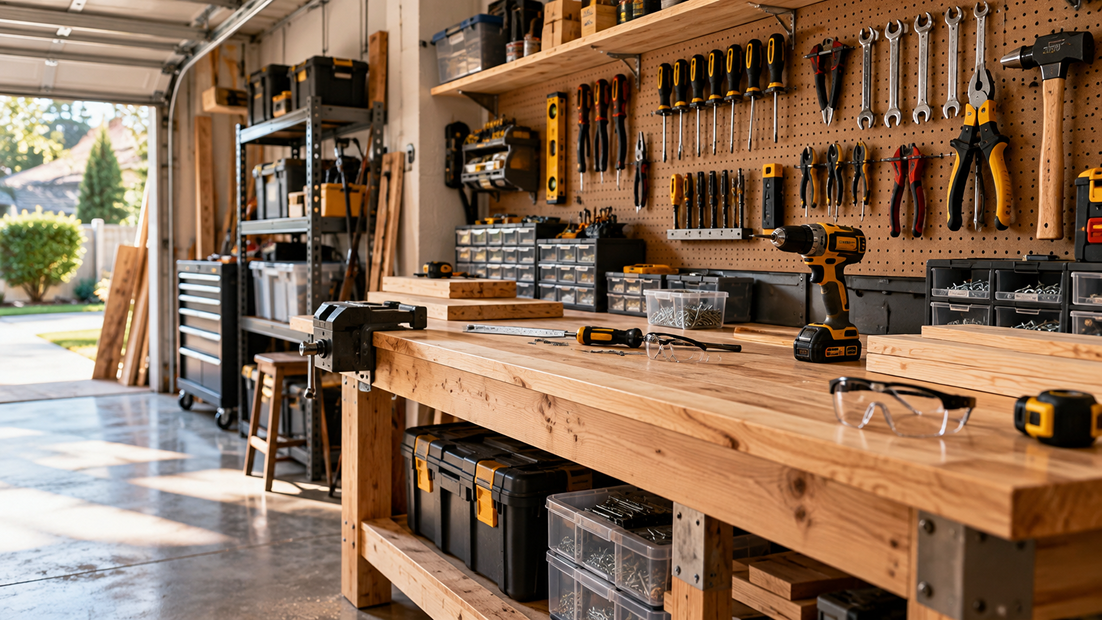
A cluttered bench is often a storage problem, not a workspace problem. Wall-mounted pegboards, shelves, magnetic strips, and tool rails make use of vertical space while keeping essential items visible.
Hang tools that you use often, such as hammers, pliers, adjustable wrenches, tape measures, and screwdrivers. Arrange them by type so the layout becomes familiar. When every tool has a home, returning it becomes faster than setting it down wherever there is space.
For heavier equipment, use sturdy shelving rated for the load. Store frequently used items between waist and shoulder height, and keep heavier boxes lower to reduce awkward lifting.
Sort Fasteners and Small Parts
Screws, nails, bolts, washers, anchors, and brackets are easy to lose when they are mixed together. Clear organizers, labeled bins, and small drawer cabinets are practical tools for keeping hardware ready for the next repair.
Sort fasteners by type, diameter, length, and material. A quick label such as “wood screws — 1½ in.” or “M6 washers” saves time and reduces the temptation to use an almost-right part.
Keep a small open container on the workbench for parts being used during the current project. At the end of the job, return unused hardware to its labeled compartment before it becomes mystery clutter.
Build Safety into the Layout
Workshop safety is easier to maintain when the layout supports it. Good lighting reduces measurement errors and makes sharp edges easier to see. Clear floor space helps prevent trips. Adequate ventilation matters whenever you use paints, adhesives, finishes, or cleaning products.
Store protective equipment where you will see it before work begins. Safety glasses, gloves, ear protection, and dust masks are most effective when they are easy to reach rather than packed in the back of a cabinet.
Keep a fire extinguisher and first-aid kit accessible, and check them periodically. For powered tools, inspect cords and batteries before use, unplug equipment before adjustments, and follow the manufacturer’s instructions for storage and maintenance.
End Every Project with a Five-Minute Reset
The best workshop organization habit is also the simplest: reset the space before you leave it. Put hand tools back on their hooks, empty the project container, wipe down the bench, and sweep up sawdust or loose debris.
This short routine protects your tools and creates a safer starting point for the next job. It also makes DIY projects feel more approachable because you are not beginning with yesterday’s mess.
At CHEMSTOREUS, we help homeowners and DIY enthusiasts find dependable hand tools, power-tool accessories, fasteners, storage solutions, and protective equipment for projects of every size. With a thoughtful layout and the right essentials, your home workshop can be ready whenever inspiration strikes.
Leave a Reply